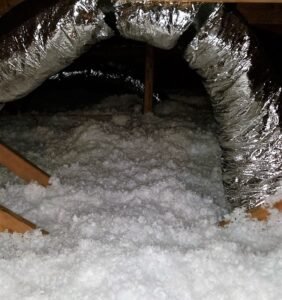
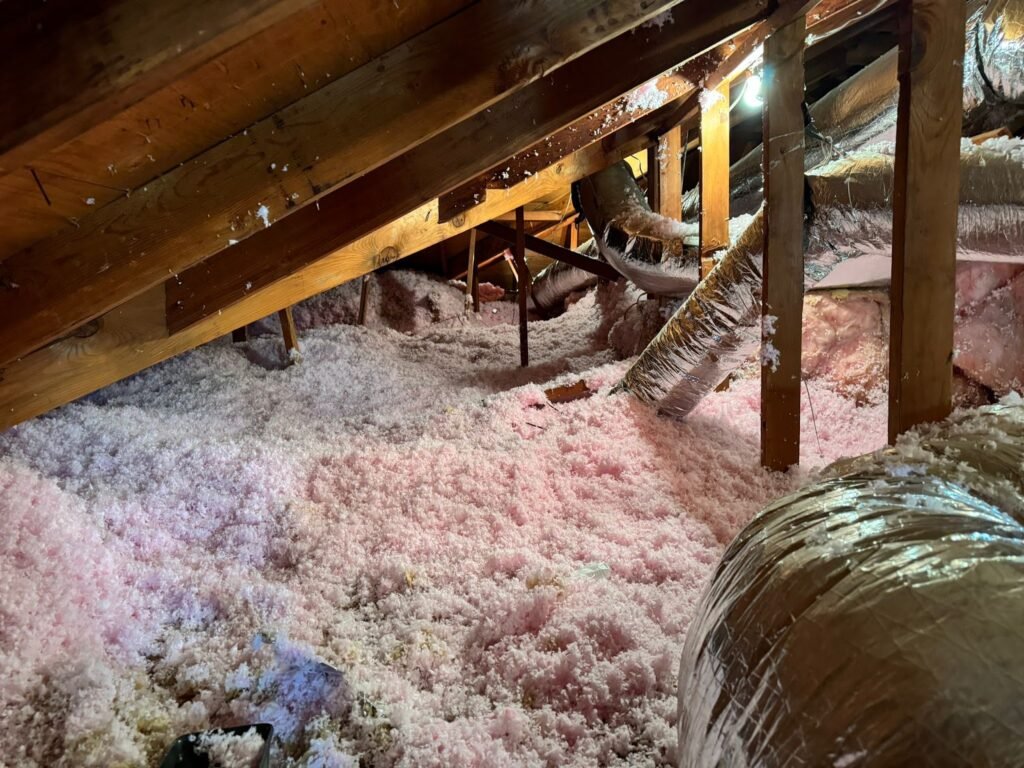
In short: North Texas, including Arlington, Fort Worth and Dallas, sits in climate zone 3 on the ENERGY STAR map. For that zone ENERGY STAR recommends an attic insulation R-value of R-49 if the attic is uninsulated, or adding up to R-38 if you already have 3 to 4 inches. Most Arlington attics we open have R-11 to R-19 worth of flattened insulation, so the fix is usually air sealing plus 8 to 12 inches of blown-in insulation on top of what is there.
Attic insulation R-value is the number homeowners search for after their first August electric bill, and again when the first November cold front rolls through and the heater will not keep up. The answer for Texas is more specific than most articles admit, because the recommendation depends on your climate zone, what is already in the attic, and whether the attic has been air sealed.
This guide gives you the ENERGY STAR numbers for North Texas, a way to check your own attic in five minutes, how inches convert to R-value for the two blown-in materials we install, and what to expect from the job.
What R-value means, in one paragraph
R-value measures how well a material resists heat flow. The higher the R-value, the better the insulation slows heat moving from your 130-degree attic into the living space in summer, and from your heated rooms into the attic in winter. R-values add up: two layers of R-19 give you R-38. That is why the recommendations below are written as targets for the total depth, not just for the new layer.
The recommended attic insulation R-value for Texas (DFW)
ENERGY STAR publishes its recommended R-values by climate zone, based on the 2021 International Energy Conservation Code. Tarrant and Dallas counties fall in zone 3, the band that runs across the southern United States from Georgia through North Texas. For zone 3 the attic guidance is:
| Your attic today | ENERGY STAR target (zone 3) | What that looks like |
|---|---|---|
| Uninsulated | R-49 | Roughly 13 to 14 inches of blown cellulose or 16 to 18 inches of blown fiberglass |
| 3 to 4 inches already (about R-11) | Add R-38 | Roughly 10 to 11 inches of cellulose or 12 to 14 inches of fiberglass on top |
| 6 to 8 inches already (about R-19 to R-25) | Bring the total to R-38 to R-49 | Add 6 to 10 inches depending on material and condition |
Source: ENERGY STAR recommended home insulation R-values. The inch figures are our field conversions; the exact depth for a given R-value is printed on every bag’s coverage chart, and your installer should show it to you.
Two things stand out. First, Texas is not a “light insulation” state in this table: zone 3 gets the same R-49 target as zone 2 along the Gulf Coast, and the step up to R-60 only begins in zone 4 north of the Red River. Second, the “add to existing” row assumes the old insulation is in decent shape. Wet, compressed or rodent-damaged insulation does not count toward the total, which is the main reason we sometimes recommend insulation removal before adding new material.
How to check your own attic in five minutes
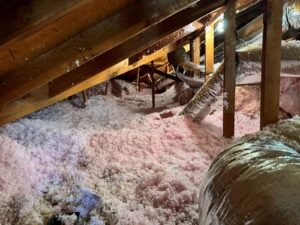
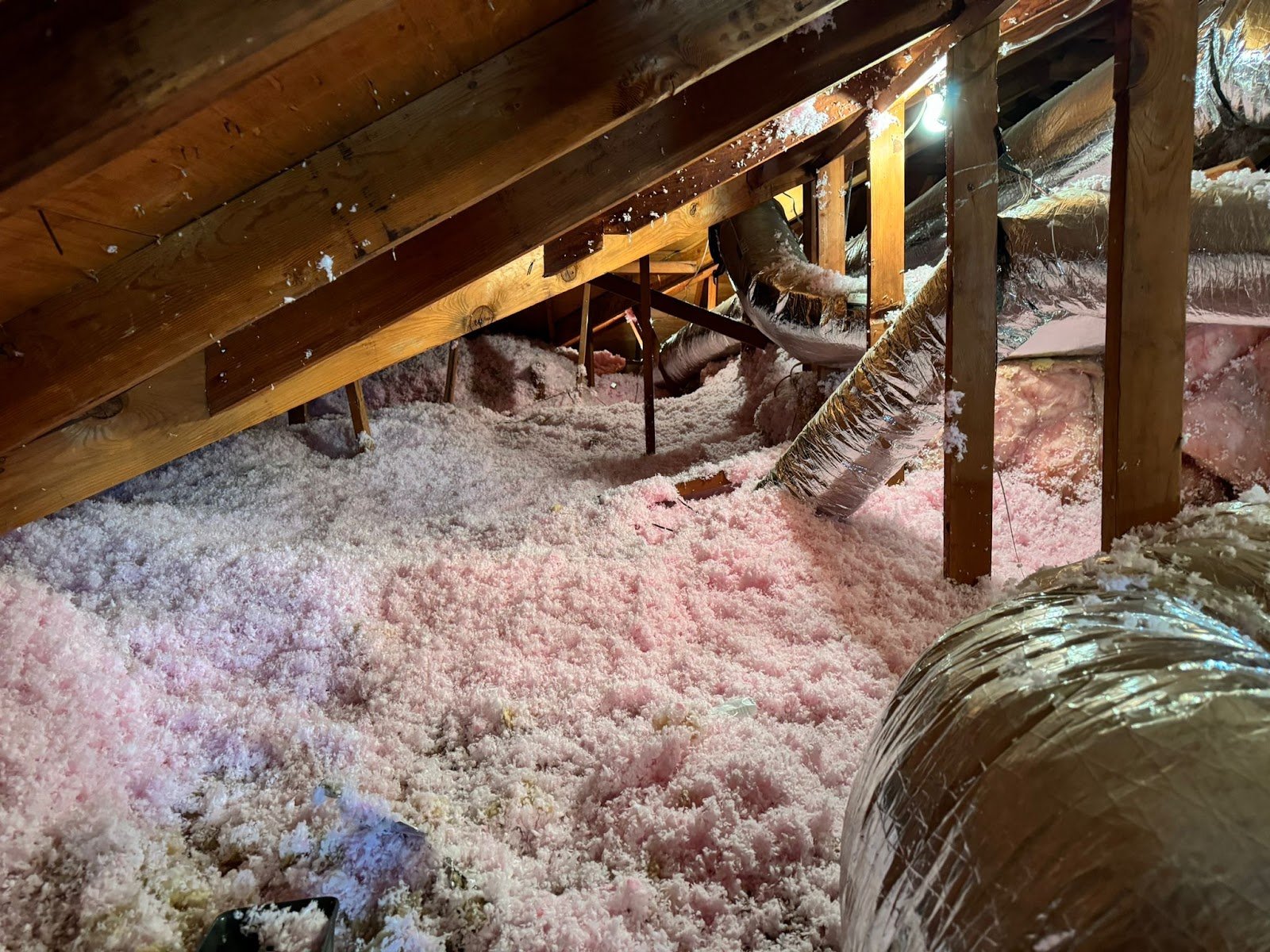
- Look at the joists. Open the attic hatch with a flashlight. If you can see the tops of the ceiling joists, the insulation is roughly 5 to 6 inches deep or less, which puts most Texas attics around R-11 to R-19. If the joists are buried under a deep, even blanket, you are closer to the target.
- Measure the depth. Push a ruler straight down in three spots away from the hatch. Insulation near the hatch is usually trampled and thinner than the rest.
- Identify the material. Pink, yellow or white fluffy material is fiberglass. Grey, paper-like material is cellulose. Thin, chalky batts in a pre-1980 home may be rock wool.
- Check for the usual damage. Dark streaks in the insulation mean air is moving through it. Flattened paths show where someone walked. Wet or clumped patches mean a roof or duct leak that must be fixed before adding anything.
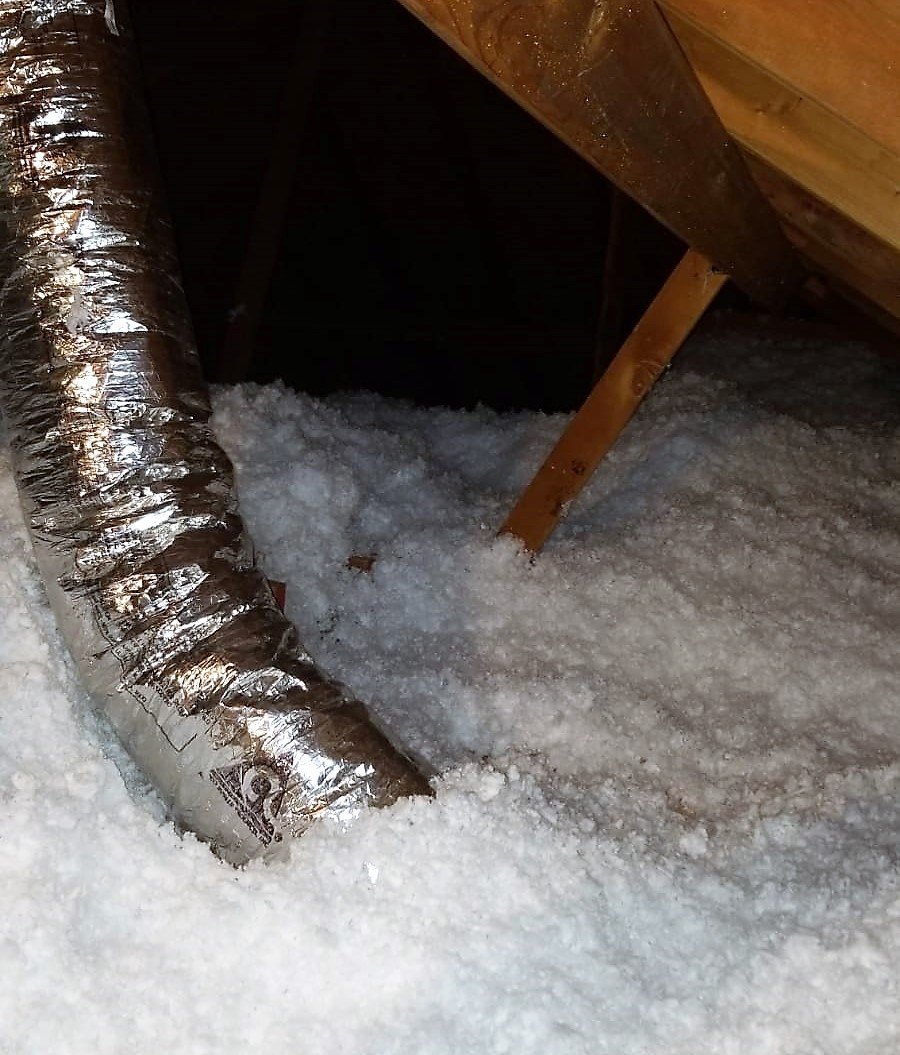
- Look at the ducts. In DFW most ductwork runs through the attic. Crushed flex duct, disconnected joints or ducts lying on the insulation will undercut any R-value upgrade. We check and seal ducts as part of the same visit; see our air duct sealing service.
Inches to R-value: blown fiberglass vs blown cellulose
The two materials we install most in Arlington attics reach the same R-value at different depths. Cellulose packs a little more R-value per inch, so it needs fewer inches, while fiberglass is lighter and settles less over the years. Use the bag’s coverage chart as the final word, but as a planning guide:
- Blown fiberglass: about R-2.2 to R-2.7 per inch. R-38 needs roughly 14 inches, R-49 roughly 17 to 18 inches.
- Blown cellulose: about R-3.2 to R-3.8 per inch. R-38 needs roughly 10 to 11 inches, R-49 roughly 13 to 14 inches.
- Batts: an R-30 fiberglass batt is about 9 to 10 inches; batts are mainly used in new construction because they cannot be fitted around existing wiring and ducts without gaps.
Whichever material you choose, the installer must keep it clear of recessed light cans that are not IC-rated, keep soffit vents open with baffles so the attic can breathe, and build a dam around the attic hatch so loose fill does not spill out every time you open it.
Air seal first, then insulate
The EPA, through its ENERGY STAR program, recommends air sealing the attic before adding insulation, and estimates that homeowners who air seal and add attic insulation save an average of 15 percent on heating and cooling costs. The reason is simple: insulation slows heat conduction, but it does nothing to stop hot attic air pouring through gaps around plumbing stacks, top plates, ceiling light boxes and the attic hatch. In a 2,000-square-foot Arlington home those gaps can add up to the equivalent of an open window.
Air sealing is cheap compared with the insulation itself, and it only has to be done once, so it belongs in every attic insulation quote. If a bid does not mention sealing, ask why.
Does more R-value always pay off in Texas?
Up to the zone 3 target, yes. Going from R-11 to R-38 cuts the heat flow through the ceiling by roughly two thirds, and the ceiling is the largest surface facing the hottest part of the house in summer. Beyond R-49 the returns shrink quickly in our climate, which is why ENERGY STAR stops there for zone 3 while recommending R-60 further north. Spend the extra money on duct sealing or a radiant barrier instead.
Ready to see numbers for your own house? Our attic insulation cost guide for Texas breaks down per-square-foot pricing for blown-in, spray foam and removal, with a worked example for a 1,500-square-foot attic.
What an attic insulation upgrade looks like with Texas Choice
- A technician measures the existing depth and material, checks the ducts, and photographs any damage.
- You get a written quote with the target R-value, the material, the number of bags and the finished depth.
- Air sealing comes first: penetrations, top plates, hatch, and any disconnected duct joints.
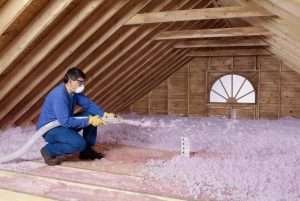
- Blown-in attic insulation is installed to the agreed depth, with baffles at the eaves and a dam at the hatch.
- Depth markers are left in the attic so you, or a home inspector, can verify the R-value later.
Frequently asked questions
What attic insulation R-value do I need in Arlington, TX?
Arlington is in ENERGY STAR climate zone 3. The recommendation is R-49 for an uninsulated attic, or adding R-38 on top of an existing 3 to 4 inches, which brings most homes to a total of R-38 to R-49.
How many inches of blown-in insulation is R-38?
About 10 to 11 inches of blown cellulose or about 14 inches of blown fiberglass. The bag’s coverage chart gives the exact installed depth for the product being used.
Can I add new insulation over old insulation?
Yes, as long as the old layer is dry, free of pests and not compressed into a mat. Blown-in insulation goes straight over existing batts or loose fill. Wet or contaminated insulation should be removed first.
Does attic insulation help in a Texas summer or only in winter?
Both, and summer is where DFW homeowners see the biggest change. The attic can reach 130 degrees or more in July, and the ceiling is the largest surface between that heat and your living space.
Is R-60 worth it in North Texas?
Usually not. ENERGY STAR’s target for zone 3 tops out at R-49. Past that point, air sealing, duct sealing and a radiant barrier give a better return than more inches of insulation.
Want to know your attic’s current R-value? Call Texas Choice Heating And Air at (469) 213-7527 or request a free attic inspection. We serve Arlington, Pantego, Fort Worth, Mansfield and the surrounding DFW area.